
Incorporating Without Guidance Will Cost You When It’s Time to Fundraise

Incorporating your startup feels like a milestone. It’s official. It’s done. You can move on.
But in reality, incorporation isn’t the finish line — it is the foundation. And when that foundation isn’t set up correctly, the cleanup is almost always more expensive than founders expect and can potentially stall a funding round.
Most bad incorporations fall into the same predictable patterns: the wrong entity type for a venture-scale company, missing founder vesting, incorrect share authorization, informal cap table tracking, incomplete documentation, or missing indemnification provisions that leave founders personally exposed to future legal costs and liabilities. These aren’t rare edge cases — they’re the norm. And they’re almost always the result of the same line of thinking: “We’ll fix it later,” “We’re not raising yet,” or “It’s easy to change.”
But the longer a startup operates, the more entrenched its legal foundation becomes. Misconfigurations can hold up the proper setup for founders, equity, tax elections, hires, advisors — and even investors. What looks like a shortcut early on can become quietly layered throughout a company’s legal stack. By the time an issue comes to light — often during fundraising and due diligence — it’s no longer a quick fix. Conversion or reconstruction can leave founders with significant, time consuming, and costly legal overhead.
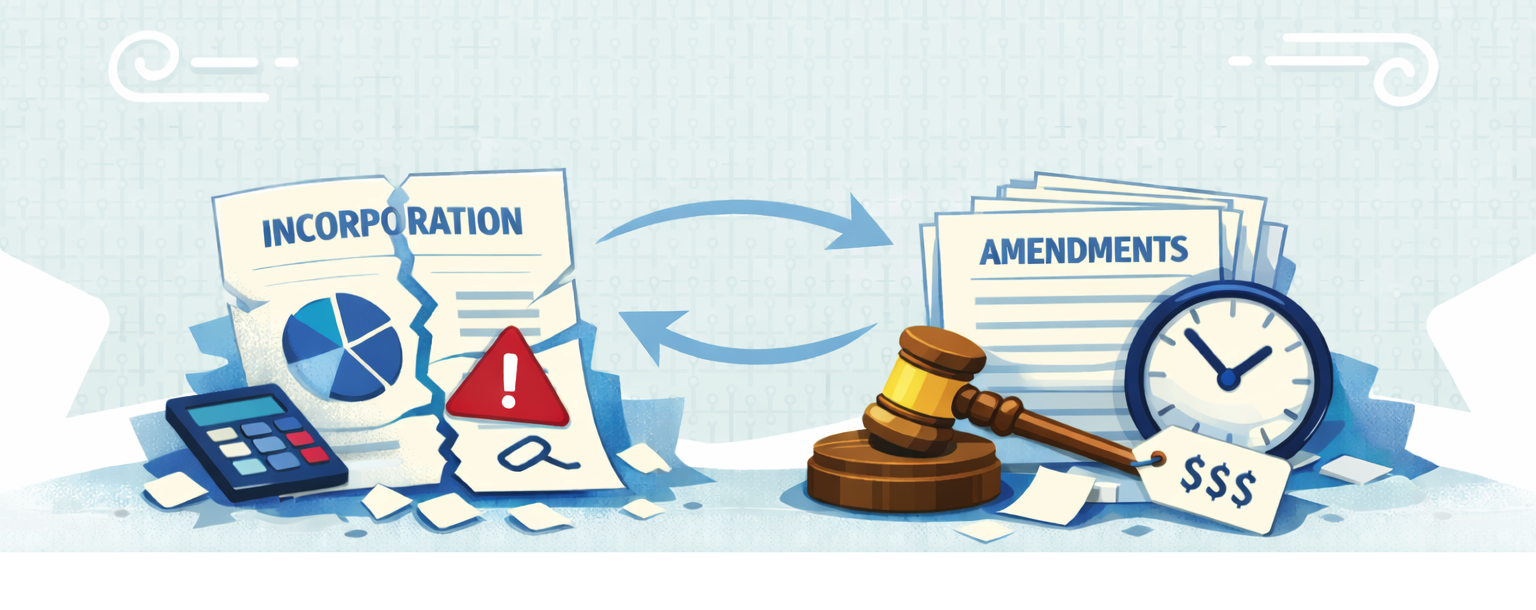
If, for example, you needed to convert an LLC into a Delaware C-Corp, amend your certificate of incorporation, change your share structure, or re-domesticate to another state, you will need to file amendments, registrations, and applications. While the filings themselves are manageable to some, they only represent a fraction of the total cost of untangling a messy legal entity setup.
Later structural adjustments to a legal entity go beyond templates and filings. They can require lawyers to:
– Review prior filings
– Reconstruct what was issued and when
– Draft new documents
– Audit cap tables
– re-issue or ratify equity
– coordinate with accountants
– ensure tax elections are handled correctly
– And more…
Even relatively “simple” fixes often run $3,000–$5,000. Once equity, multiple founders, or tax consequences are involved, that number can easily exceed $10,000 in fees and billable hours.
The numbers above also assume fairly decent record keeping. Hunting for dates, agreements, documents, and past service providers can compound those costs further.
The reality is that your average startup founder doesn’t have the luxury of maintaining an immaculate back office. A founder trying to launch a product, build a team, and raise funding has too many competing priorities. Things are left by the wayside, or simply never get done in the first place. This legal review and discovery process requires a huge amount of billable hours, founder time and energy, or more likely a combination of both.
Taxes add more wrinkles, because before your company is successful, no one will come to your door looking for a missed exemption filing or tax election. Instead it will surface later when investors are assessing the risk of investing in your company. Most experienced investors, at one time or another, have had investments fold when tax issues have forced founders to lose focus or exhaust capital.
Even in a best case scenario, for a fast-moving startup with time in short supply, losing momentum or delaying funding can result in total failure. Legal cleanups often stretch for weeks or even months. Investor attention is limited and waiting for paperwork can easily turn into disengaging; time kills deals.
Institutional investors expect clean, standard, investor-ready structures. If your foundation needs fixing, it can create friction to investment even if the underlying business is strong and investors are eager.
The Less Expensive, Futureproof Path
Fixing a bad incorporation almost always costs more than setting it up correctly in the first place. For many founders weighing the initial setup costs, the choice begins to look like “Pay now or pay later.” Gust Launch has made the legal formation processes based on best practices, affordable and accessible to all founders.
Setting up your company on solid legal footing is a much easier decision when weighing hundreds of dollars in initial costs against potential tens of thousands down the line.
For a high-growth startup, being able to seize opportunity when it arises is key. Incorporating the “right” way is really about removing friction in important moments. For a startup, having legible legal documentation, an investor-ready structure, and accounting for best practices from Day 1 isn’t something to outsource later – it’s table stakes.
Gust Launch was built to help founders move quickly without creating future legal debt. With guided incorporation workflows, built-in cap table management, and ongoing compliance support — founders can set a clean foundation from day one. Whether you’re about to incorporate or wondering if your current structure needs a second look, the goal is the same: avoid paying a much higher price later.


Gust Launch can set your startup right so its investment ready.
This article is intended for informational purposes only, and doesn't constitute tax, accounting, or legal advice. Everyone's situation is different! For advice in light of your unique circumstances, consult a tax advisor, accountant, or lawyer.